It's fall, and there's no better time to go camping in Yotsuba&! Volume 12.
Note: Yotsuba&! Volume 12 is part of an ongoing series. Check out the review of Volume 1 here, and Volume 11 here. Otherwise, read on!
Monday, May 23, 2016
Monday, April 18, 2016
Manga Monday: Food is important
Monday, April 4, 2016
Manga Monday: Cute schoolgirls doing cute things
Trends in media tend to go through phases. At first, it's the hot, new, innovative thing. Later, copycat series spring up like mushrooms after a rain, and the quality of the entire genre suffers. Eventually, a writer decides to turn the trope on its head and create a satire.
The delinquent genre was satirized in Cromartie High School. The magical girl genre was absolutely subverted in Puella Magi Madoka Magica. Finally, Keiichi Arawi takes on the cute schoolgirl genre in nichijou Volume 1.
We certainly have all the expected characters here. There's Yuuko, the energetic girl who's nevertheless too lazy to do her homework and constantly copies off of her friends. There's Mio, who has a secret crush on a male classmate, and is constantly struggling to hide her yaoi art and manuscripts from her friends. Nano just wants everyone to believe she's a normal girl, although the windup key on her back tends to give away her robot nature, and Professor, the eight-year-old who created her. There's even Mai, who moved here recently, and is quiet with glasses.
With a group of girls like this, there's plenty of room for hijinks to ensue, and they certainly do. Whether Yuuko's daydreaming out the window lets her spy their principal wrestling a deer, or Nano's despair at Professor replacing her limbs with random items like Swiss roll cake, the gags are fast and furious.
There's plenty to love here, and plenty of room for the series to grow. From minor characters getting their time to shine to more explanation of Professor, hopefully Arawi can keep it fresh and interesting for years to come.
Highs: The manga never tries to take itself more seriously than it should, which is exactly the attitude a series like this should have.
Lows: There are hints at storylines that may continue throughout the series, but none of them get quite enough screentime for the reader to care one way or the other.
Verdict: nichijou Volume 1 is a fun, satirical look at the adorable schoolgirl genre.
Further Reading: Cromartie High School, My Neighbor Seki, Azumanga Daioh
Monday, March 21, 2016
Manga Monday: The return of Robot Family and Thief X
Monday, March 14, 2016
Manga Monday: Does love have to be unplanned?
The truth behind Shiro-sensei's behavior finally becomes clear to even Hina in Suki: A Like Story Volume 3.
Note: Suki: A Like Story Volume 3 is the final volume in a series. For Volume 1 click here, and for Volume 2 click here. Otherwise, read on!
Monday, March 7, 2016
Manga Monday: Time for a field trip!
Even though it's usually not organized through a school club, field trips are an integral part of high school life, and the girls of Megurigaoka Academy Private High School are headed to the mall in School-Live! Volume 2.
Note: School-Live! Volume 2 is part of an ongoing series. Check out the review of Volume 1 here. Otherwise, read on!
Monday, February 29, 2016
Manga Monday: A pretty calico remembers her kittenhood
Now that Chi's Sweet Home has come to an end, there is a distressing absence of cat manga. Thankfully, Konami Kanata has one more surprise up her sleeve with FukuFuku: Kitten Tales.
Here, a doting elderly owner comes across the photos she took of her cat's first year with her, and brings them out to show Fuku Fuku.
What follows is an adorable look into the first year of a kitten's life. From discovering that human food might not be quite as tasty as her kibble to the amazing warmth that is a kotatsu on a cold day, Fuku Fuku has a lot to learn, and a lot to teach her well-meaning owner as well.
Unlike in Chi's Sweet Home, we're not privy to Fuku Fuku's thoughts being translated into English. Luckily, Kanata's clean, simple art style lets her expressions and thoughts come through nearly as well as if they were written out.
As a reader who never wanted Chi's Sweet Home to end (wouldn't Chi in a beret be adorable?), this is a welcome callback to the simple, lovely stories that made Chi so loveable.
Highs: Watching her owner delight in Fuku Fuku learning her name, and promptly learn what it is to be ignored by her cat, is a feeling universal to cat owners.
Lows: The odd 'Alice in Wonderland' dream sequence seems more out of place than it perhaps intended.
Verdict: FukuFuku: Kitten Tales is a must-read for fans of Chi's Sweet Home who have a manga-kitten-sized hole in their reading lives.
Further Reading: Chi's Sweet Home, Yotsuba&!, Milkyway Hitchhiking
Here, a doting elderly owner comes across the photos she took of her cat's first year with her, and brings them out to show Fuku Fuku.
What follows is an adorable look into the first year of a kitten's life. From discovering that human food might not be quite as tasty as her kibble to the amazing warmth that is a kotatsu on a cold day, Fuku Fuku has a lot to learn, and a lot to teach her well-meaning owner as well.
Unlike in Chi's Sweet Home, we're not privy to Fuku Fuku's thoughts being translated into English. Luckily, Kanata's clean, simple art style lets her expressions and thoughts come through nearly as well as if they were written out.
As a reader who never wanted Chi's Sweet Home to end (wouldn't Chi in a beret be adorable?), this is a welcome callback to the simple, lovely stories that made Chi so loveable.
Highs: Watching her owner delight in Fuku Fuku learning her name, and promptly learn what it is to be ignored by her cat, is a feeling universal to cat owners.
Lows: The odd 'Alice in Wonderland' dream sequence seems more out of place than it perhaps intended.
Verdict: FukuFuku: Kitten Tales is a must-read for fans of Chi's Sweet Home who have a manga-kitten-sized hole in their reading lives.
Further Reading: Chi's Sweet Home, Yotsuba&!, Milkyway Hitchhiking
Monday, February 22, 2016
Manga Monday: Has Yokoi completely lost her ability to focus?
Monday, January 18, 2016
Manga Monday: Short speculative fiction from the God of Manga
No one represents the beginnings of the manga art form quite the way Osamu Tezuka does, and his anthology Clockwork Apple gives the reader a taste of the suspenseful.
In 'Miraculous Conception' a scientist and his domestic android are working on Saturn's moon Titan. They've lived alone together for seven years, and slowly they've fallen in love. After holding a wedding ceremony for themselves, the scientist Hiroshi is killed by escaped convicts who have decided to use his science station as a hideout. A tragedy, to be sure, but what explains the increasing waistline of the android?
The titular story 'A Clockwork Apple' shows the reader a town under siege. The roads in and out of town have been closed indefinitely for repairs, and cars are turned back by force if they try to get out. Food could be an issue, but the main employer in the area has plenty of supplies for its cafeteria, and the stores have a large stockpile of rice. Everyone seems okay with the situation and doesn't question it, except for Shirakawa, whose wife serves bread instead of rice. Even the pharmacist, who took a sample of the rice to the next town over to run a few tests, hasn't been seen in days. Is Shirakawa descending into madness, or is there a conspiracy at work?
Readers of Tezuka's Black Jack will find 'Sack' eerily familiar. The narrator meets a wonderful woman named Rika. After a whirlwind romance, he travels to her home to ask her mother for Rika's hand in marriage. Strangely, her mother doesn't have a daughter named Rika. Her only daugher, Mari, is a perfect copy of Rika, though, even though she professes to have never met him before. At a later meeting, Rika begs him to prevent Mari's surgery on the 20th, but can't explain why. Is there something sinister going on?
These stories of the late 1960s and early 1970s give the reader a snapshot into the thoughts and fears of postwar Japan. Throughout the collection weaves a distrust of the government and authority, as well as an undying optimism for the future, even if there are many ways for it to be derailed. Once again, Tezuka is able to mine the depths of the human psyche, and reveal more than a traditional author ever could.
Highs: Whether a statement about the follies of war or a creepy suspense story, all of Tezuka's works leave an indelible mark on the reader.
Lows: Even with the footnotes, it's hard to be familiar enough with the era in Japan to fully follow a few of the narratives.
Verdict: Best suited for a reader very familiar with manga in general, Clockwork Orange is a masterpiece.
Further Reading: Black Jack, A*tomcat, A Bride's Story
In 'Miraculous Conception' a scientist and his domestic android are working on Saturn's moon Titan. They've lived alone together for seven years, and slowly they've fallen in love. After holding a wedding ceremony for themselves, the scientist Hiroshi is killed by escaped convicts who have decided to use his science station as a hideout. A tragedy, to be sure, but what explains the increasing waistline of the android?
The titular story 'A Clockwork Apple' shows the reader a town under siege. The roads in and out of town have been closed indefinitely for repairs, and cars are turned back by force if they try to get out. Food could be an issue, but the main employer in the area has plenty of supplies for its cafeteria, and the stores have a large stockpile of rice. Everyone seems okay with the situation and doesn't question it, except for Shirakawa, whose wife serves bread instead of rice. Even the pharmacist, who took a sample of the rice to the next town over to run a few tests, hasn't been seen in days. Is Shirakawa descending into madness, or is there a conspiracy at work?
Readers of Tezuka's Black Jack will find 'Sack' eerily familiar. The narrator meets a wonderful woman named Rika. After a whirlwind romance, he travels to her home to ask her mother for Rika's hand in marriage. Strangely, her mother doesn't have a daughter named Rika. Her only daugher, Mari, is a perfect copy of Rika, though, even though she professes to have never met him before. At a later meeting, Rika begs him to prevent Mari's surgery on the 20th, but can't explain why. Is there something sinister going on?
These stories of the late 1960s and early 1970s give the reader a snapshot into the thoughts and fears of postwar Japan. Throughout the collection weaves a distrust of the government and authority, as well as an undying optimism for the future, even if there are many ways for it to be derailed. Once again, Tezuka is able to mine the depths of the human psyche, and reveal more than a traditional author ever could.
Highs: Whether a statement about the follies of war or a creepy suspense story, all of Tezuka's works leave an indelible mark on the reader.
Lows: Even with the footnotes, it's hard to be familiar enough with the era in Japan to fully follow a few of the narratives.
Verdict: Best suited for a reader very familiar with manga in general, Clockwork Orange is a masterpiece.
Further Reading: Black Jack, A*tomcat, A Bride's Story
Thursday, January 14, 2016
A look at how childhood really is
Somehow, in the process of growing up and having responsibilities, adults forget what it's really like to be a child. They forget the leisure, of taking a book into a field in the morning and only wandering back home when hungry or it gets dark out. They forget what it's like to have people tell you what to do, with arbitrary reasons that you're not allowed to question. They forget the discomfort of knowing that a situation isn't okay, but not having enough experience to know why it's wrong, or the experience to know what to do about it.
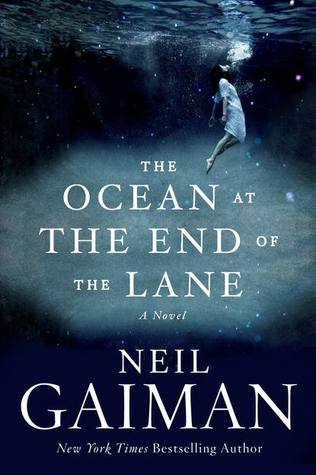
Neil Gaiman never forgot. And by not forgetting, he's written the truest young characters in The Ocean at the End of the Lane.
The book starts out with the narrator coming back to where he grew up for a funeral. He's dressed in the proper clothes, says the proper things, and takes a certain comfort in knowing what he's supposed to do and say during a difficult time.
As he drives from the funeral to the cemetery, he has a bit of time to himself, and finds his car pointing towards where he once lives. The fields and small homes have been replaced with housing estates, the flint-strewn country lane with tarmac. His childhood home is long gone, and the home of his adolescence isn't what has brought him back here.
As he rolls his car along, the road regresses to the lane of his childhood, and eventually to a footpath. He gets out, and walks up to a house he hasn't thought of in too long, and slides sideways into memories of his seventh year.
As with most Gaiman tales, to lay out the story before reading it is to take away some of the magic. It's not an easy read, because childhood isn't easy. There's monsters, and some of them are the adults he's supposed to be able to trust. There's heroes, even if they wouldn't call themselves that. There's bravery and fear, sometimes at the same time, and there's sacrifice.
There's the magic that Gaiman brings to his tales, which transcends description.
Highs: No one combines childhood, fantasy and fear like Neil Gaiman
Lows: Sometimes being reminded of the hard parts of childhood isn't fun
Verdict: Yet another amazing tale from one of the greatest fantasy authors
Further Reading: Coraline, Trigger Warning
Neil Gaiman never forgot. And by not forgetting, he's written the truest young characters in The Ocean at the End of the Lane.
The book starts out with the narrator coming back to where he grew up for a funeral. He's dressed in the proper clothes, says the proper things, and takes a certain comfort in knowing what he's supposed to do and say during a difficult time.
As he drives from the funeral to the cemetery, he has a bit of time to himself, and finds his car pointing towards where he once lives. The fields and small homes have been replaced with housing estates, the flint-strewn country lane with tarmac. His childhood home is long gone, and the home of his adolescence isn't what has brought him back here.
As he rolls his car along, the road regresses to the lane of his childhood, and eventually to a footpath. He gets out, and walks up to a house he hasn't thought of in too long, and slides sideways into memories of his seventh year.
As with most Gaiman tales, to lay out the story before reading it is to take away some of the magic. It's not an easy read, because childhood isn't easy. There's monsters, and some of them are the adults he's supposed to be able to trust. There's heroes, even if they wouldn't call themselves that. There's bravery and fear, sometimes at the same time, and there's sacrifice.
There's the magic that Gaiman brings to his tales, which transcends description.
Highs: No one combines childhood, fantasy and fear like Neil Gaiman
Lows: Sometimes being reminded of the hard parts of childhood isn't fun
Verdict: Yet another amazing tale from one of the greatest fantasy authors
Further Reading: Coraline, Trigger Warning
Monday, December 7, 2015
Manga Monday: Is fooling around genetic?
Monday, November 23, 2015
Manga Monday: There's even competition in the school lunch game
Misunderstandings abound, and a few new characters are added to the mix as well in The Devil is a Part-Timer! High School! Volume 2.
Note: The Devil is a Part-Timer! High School! Volume 2 is part of an ongoing series. For the review of Volume 1 click here. Otherwise, read on!
Monday, November 16, 2015
Manga Monday: A school club has never been more essential to student life
The school club has long been an important part of the Japanese high school experience, but perhaps it's never been more important than for the girls of Megurigaoka Academy Private High School in School-Live! Volume 1.
The founding principles of the School Living Club are really pretty simple: to best utilize the facilities of the school, it is imperative that the members live their entire lives in the school.
It's not the largest of clubs; in fact, besides the faculty adviser Megumi Sakura, there's only three members right now. But they're the most earnest, devoted members a club could wish for.
Yuri Wakasa is the club president. She is in charge of all of the club activities, and plans the practical aspects of the club's adventures. She's also oftentimes found on the school roof, helping with the gardens that the Agriculture Club have there.
Kurumi Ebisuzawa is the tough girl of the group. She's the one who plows through obstacles, and makes sure that all of Ri-san's plans turn out as expected. She's never too far away from her shovel, so perhaps she likes to help out the Agriculture Club as well.
Which brings us to Yuki Takeya, the heart of the club. No matter what problems the School Living Club faces, from rainy days to possible ghosts, Yuki's smile is what gets her clubmates through the day.
While a club based solely on the school in which it takes place might seem dull, there's always something to do in this remarkably well-provisioned and self-sufficient school. And as the girls grow closer, they've made a pact to graduate together, no matter what.
Highs: Even though the girls and their teacher each fill a very traditional role in a schoolgirl manga, even in this first volume they each have enough personality to draw the reader in immediately.
Lows: It's still odd that a school would allow a group of students to live in a classroom though.
Verdict: A very cute manga that has more depth than it seems at first glance.
Further Reading: My Neighbor Seki, The Devil is a Part-Timer! High School!, Cromartie High School
The founding principles of the School Living Club are really pretty simple: to best utilize the facilities of the school, it is imperative that the members live their entire lives in the school.
It's not the largest of clubs; in fact, besides the faculty adviser Megumi Sakura, there's only three members right now. But they're the most earnest, devoted members a club could wish for.
Yuri Wakasa is the club president. She is in charge of all of the club activities, and plans the practical aspects of the club's adventures. She's also oftentimes found on the school roof, helping with the gardens that the Agriculture Club have there.
Kurumi Ebisuzawa is the tough girl of the group. She's the one who plows through obstacles, and makes sure that all of Ri-san's plans turn out as expected. She's never too far away from her shovel, so perhaps she likes to help out the Agriculture Club as well.
Which brings us to Yuki Takeya, the heart of the club. No matter what problems the School Living Club faces, from rainy days to possible ghosts, Yuki's smile is what gets her clubmates through the day.
While a club based solely on the school in which it takes place might seem dull, there's always something to do in this remarkably well-provisioned and self-sufficient school. And as the girls grow closer, they've made a pact to graduate together, no matter what.
Highs: Even though the girls and their teacher each fill a very traditional role in a schoolgirl manga, even in this first volume they each have enough personality to draw the reader in immediately.
Lows: It's still odd that a school would allow a group of students to live in a classroom though.
Verdict: A very cute manga that has more depth than it seems at first glance.
Further Reading: My Neighbor Seki, The Devil is a Part-Timer! High School!, Cromartie High School
Monday, November 9, 2015
Manga Monday: A heartfelt farewell to a longtime friend
Monday, November 2, 2015
Manga Monday: A new neighbor appears
Monday, October 19, 2015
Manga Monday: Are we finally finding out where everybody stands?
Monday, September 28, 2015
Manga Monday: Santa-related shenanigans for Seki
Even the holidays are inspiration for the ever-distracted Seki in My Neighbor Seki Volume 4.
Note: My Neighbor Seki Volume 4 is part of an ongoing series. Check out the review for Volume 1 here, and Volume 3 here. Otherwise, read on!
Thursday, September 24, 2015
The sympathetic side of murderous Japanese spirits
Bookstore shelves are packed with books drawing from Western folklore. Elves, fairies, sprites, even selkies have found their way into books recently, especially ones targeting the ever-growing young adult market.
Part of writing young adult, it seems, is to not expect too much outside knowledge of the reader going in. It's assumed that readers know about European fantasy creatures, since that's what most of the fairy tales and Disney movies they've grown up on focus on. But once a piece of another culture's folklore hits the public knowledge, it's fair game.
Enter Okiku, and The Girl from the Well. Okiku was introduced to most Western audiences in the 2002 movie 'The Ring,' but there's much more to her than popping out of old VHS tapes. In the intervening years, Okiku has moved on from haunting the well where she was killed. She's made it her passion to exact revenge on those who have hurt children, and she has left a trail of gruesome, unsolved murders in her wake.
But one day, while drifting around looking for a new victim, she comes across Tarquin. Tark is, in many ways, just an ordinary 15 year old boy. He and his father have just moved, and he's having some of the normal problems fitting in to his new school. He's quiet by nature, so it's hard to get him to come out of his shell.
And, well, accidentally summoning a flock of headless birds in the cafeteria might not make him homecoming king either.
The problem started when he was very young. Before his mother married his father, she was a shrine maiden who spent her days putting spirits to rest with her sister back in Japan. Later on, during a visit back to the shrine, and exorcism went terribly wrong and the only way to keep the malicious spirit from destroying the town that the shrine protects was to bind it to her young son.
The trauma and guilt from that night broke Yoko, and after a few instances of trying to kill Tark and the spirit trapped within him, she's been committed to a mental hospital.
Tark's father has been doing his best, trying to balance a demanding job, a mad wife, and a son who understandably has a few issues.
And the binding left Tark with tattoo-like symbols covering his arms, hips, and chest, without a mother, and a history of bizarre, alienating events surrounding him.
It's no wonder Okiku notices him, and takes an interest.
We also get to know Tark's cousin Callie. A teacher's aide at the school he's now attending, they were close when Tark was young, and she feels a bit of a motherly responsibility for her young family member. She knows that he's been having a hard time, especially since they've moved closer to his mother's hospital and there's been a bit more interaction with her, and she wants to do whatever she can to help Tark out.
And perhaps figure out what's going on with the strange spirits that have been following him.
For as he's growing up, and becoming a less 'pure' vessel, the binding symbols his mother used to shut away the evil spirit have begun to fade. The strange occurrences have become more frequent, and if that spirit escapes, it won't end well for anyone involved.
The Girl from the Well doesn't read like a traditional Stephen King horror novel. Like many Japanese novels, it's much more contemplative and slow-building than that. Most of the bad reviews on Goodreads seem to be coming from people who are expecting a different sort of book. This isn't a hack-and-slash, bloody horror novel. Rather, the creepiness builds as the story progresses and the reader becomes invested in the characters. The tone of the novel rather than graphic imagery is what will keep the reader up at night, either to finish the book or wondering what that shadow behind them in the mirror is.
Highs: This is a great starter book for people who aren't too familiar with Japanese folklore, since The Ring was so popular, and can easily spark an interest in other books with Japanese settings.
Lows: Once again the father is clueless - bordering on neglectful - and mostly ignored throughout the book.
Verdict: A wonderfully creepy young adult horror novel with a distinct East Asian flavor.
Further Reading: The Suffering, Another, Miss Peregrine's Home for Peculiar Children
Part of writing young adult, it seems, is to not expect too much outside knowledge of the reader going in. It's assumed that readers know about European fantasy creatures, since that's what most of the fairy tales and Disney movies they've grown up on focus on. But once a piece of another culture's folklore hits the public knowledge, it's fair game.
Enter Okiku, and The Girl from the Well. Okiku was introduced to most Western audiences in the 2002 movie 'The Ring,' but there's much more to her than popping out of old VHS tapes. In the intervening years, Okiku has moved on from haunting the well where she was killed. She's made it her passion to exact revenge on those who have hurt children, and she has left a trail of gruesome, unsolved murders in her wake.
But one day, while drifting around looking for a new victim, she comes across Tarquin. Tark is, in many ways, just an ordinary 15 year old boy. He and his father have just moved, and he's having some of the normal problems fitting in to his new school. He's quiet by nature, so it's hard to get him to come out of his shell.
And, well, accidentally summoning a flock of headless birds in the cafeteria might not make him homecoming king either.
The problem started when he was very young. Before his mother married his father, she was a shrine maiden who spent her days putting spirits to rest with her sister back in Japan. Later on, during a visit back to the shrine, and exorcism went terribly wrong and the only way to keep the malicious spirit from destroying the town that the shrine protects was to bind it to her young son.
The trauma and guilt from that night broke Yoko, and after a few instances of trying to kill Tark and the spirit trapped within him, she's been committed to a mental hospital.
Tark's father has been doing his best, trying to balance a demanding job, a mad wife, and a son who understandably has a few issues.
And the binding left Tark with tattoo-like symbols covering his arms, hips, and chest, without a mother, and a history of bizarre, alienating events surrounding him.
It's no wonder Okiku notices him, and takes an interest.
We also get to know Tark's cousin Callie. A teacher's aide at the school he's now attending, they were close when Tark was young, and she feels a bit of a motherly responsibility for her young family member. She knows that he's been having a hard time, especially since they've moved closer to his mother's hospital and there's been a bit more interaction with her, and she wants to do whatever she can to help Tark out.
And perhaps figure out what's going on with the strange spirits that have been following him.
For as he's growing up, and becoming a less 'pure' vessel, the binding symbols his mother used to shut away the evil spirit have begun to fade. The strange occurrences have become more frequent, and if that spirit escapes, it won't end well for anyone involved.
The Girl from the Well doesn't read like a traditional Stephen King horror novel. Like many Japanese novels, it's much more contemplative and slow-building than that. Most of the bad reviews on Goodreads seem to be coming from people who are expecting a different sort of book. This isn't a hack-and-slash, bloody horror novel. Rather, the creepiness builds as the story progresses and the reader becomes invested in the characters. The tone of the novel rather than graphic imagery is what will keep the reader up at night, either to finish the book or wondering what that shadow behind them in the mirror is.
Highs: This is a great starter book for people who aren't too familiar with Japanese folklore, since The Ring was so popular, and can easily spark an interest in other books with Japanese settings.
Lows: Once again the father is clueless - bordering on neglectful - and mostly ignored throughout the book.
Verdict: A wonderfully creepy young adult horror novel with a distinct East Asian flavor.
Further Reading: The Suffering, Another, Miss Peregrine's Home for Peculiar Children
Monday, September 21, 2015
Manga Monday: How bad can a public high school really be?
It's not Takashi Kamiyama's fault. It really isn't. He could have gotten into a much better high school if he wanted to.
In middle school, Ichiro Yamamoto helped him stand up to the bullies who called him 'pencilneck' and stole his lunch money. So when high school exam time came around, and Yamamoto was discouraged, Kamiyama told him that a good student can learn anywhere, and that he would apply for Cromartie High School, the easiest school to get into, with him.
Unfortunately, Yamamoto didn't even get into Cromartie, so now Kamiyama is at a very, very rough school all by himself in Cromartie High School Volume 1.
Cromartie is a rather...unique school. To begin with, it's a school for delinquents. Since no good student in their right mind would ever go to Cromartie, it's assumed that you've built up a hard reputation for yourself in middle school. This works to Yamamoto's advantage, since only a boy with the worst reputation ever could afford to seem as weak as Yamamoto does.
Since delinquency is to be expected at a school like this, it takes some extremely special circumstances for Cromartie to stand out.
Like the 'kid' in Class 3 with a striking resemblance to Freddy Mercury.
Or the gorilla in another classroom.
Or...Mechazawa.
Cromartie High School is a comedy spoofing the popular 'yankii' (juvenile delinquent) manga genre of the 1970s and 1980s. The randomness abounds, the laughs are constant, and by the end, perhaps your own high school experience won't seem so bad after all.
Highs: Motion sickness is a terrible disorder that does not need to be made light of.
Lows: This isn't a starter manga, as a reader without a good founding in manga tropes would probably be lost.
Verdict: Cromartie High School Volume 1 may not be for everyone, but those with the right sense of humor will enjoy it immensely.
Further Reading: Shiba Inuko-san Volume 1, My Neighbor Seki Volume 1
In middle school, Ichiro Yamamoto helped him stand up to the bullies who called him 'pencilneck' and stole his lunch money. So when high school exam time came around, and Yamamoto was discouraged, Kamiyama told him that a good student can learn anywhere, and that he would apply for Cromartie High School, the easiest school to get into, with him.
Unfortunately, Yamamoto didn't even get into Cromartie, so now Kamiyama is at a very, very rough school all by himself in Cromartie High School Volume 1.
Cromartie is a rather...unique school. To begin with, it's a school for delinquents. Since no good student in their right mind would ever go to Cromartie, it's assumed that you've built up a hard reputation for yourself in middle school. This works to Yamamoto's advantage, since only a boy with the worst reputation ever could afford to seem as weak as Yamamoto does.
Since delinquency is to be expected at a school like this, it takes some extremely special circumstances for Cromartie to stand out.
Like the 'kid' in Class 3 with a striking resemblance to Freddy Mercury.
Or the gorilla in another classroom.
Or...Mechazawa.
Cromartie High School is a comedy spoofing the popular 'yankii' (juvenile delinquent) manga genre of the 1970s and 1980s. The randomness abounds, the laughs are constant, and by the end, perhaps your own high school experience won't seem so bad after all.
Highs: Motion sickness is a terrible disorder that does not need to be made light of.
Lows: This isn't a starter manga, as a reader without a good founding in manga tropes would probably be lost.
Verdict: Cromartie High School Volume 1 may not be for everyone, but those with the right sense of humor will enjoy it immensely.
Further Reading: Shiba Inuko-san Volume 1, My Neighbor Seki Volume 1
Tuesday, September 15, 2015
Zombie outbreak survivors are just as factionalized as before
A world with superheroes could be a wonderful thing. With great power tends to come great responsibility, and it seems as though people with the ability to protect those in need gravitate towards such hobbies.
Los Angeles has certainly benefited from its superpowered saviors. Gorgon has a particular vendetta against the street gang calling themselves the Seventeens. Mighty Dragon has been keeping an eye on the streets as well, and Stealth seems to be keeping attacks on women in check.
And then...the virus gets loose.
In Ex-Heroes, Peter Cline combines the very popular superhero and zombie genres to create a very interesting post-apocalyptic world. Taking place one year after the outbreak began, with flashbacks to the superheroes' experiences before the crisis, a band of superheroes has made a 'safe zone' out of the old Paramount Studios lot. They go on raids outside of the walls of the Mount for supplies, but have also converted rooftops on the lot to farming land, and are fairly self-sustaining.
They're not the only humans left in LA, however. Gorgon's old enemy, the Seventeens, also have a stronghold. Unfortunately, they're not nearly as nice to their civilians as the Heroes are.
But beyond that, there's been some strange developments amongst the ex-humans. When the Heroes captured three of the Seventeens, they each attempted to kill themselves in their holding cells. And one of the one who succeeded seemed...intelligent. Instead of launching himself at the nearest warm body, it was able to converse with the Heroes, and tell them what the Seventeens had in store for them.
Peter Cline has created a fascinating world in Ex-Heroes, filled with flawed heroes. No one comes through an apocalypse without at least a bit of baggage, and through the flashbacks Cline shows us exactly where each character is coming from. Even the revelation of how the outbreak started is equal parts fascinating and heartbreaking.
Ex-Heroes leaves a huge world to explore in subsequent books, characters who have an uphill battle before them, and a satisfying conclusion.
Highs: While a bit cookie-cutter to begin with, both female characters hold their own well.
Lows: While death is inevitable in a series like this, I wish a few of the characters we lost had made it through.
Verdict: An excellent genre mash-up that satisfies fans of zombies, superheroes, and both.
Further Reading: Under a Graveyard Sky, World War Z, V Wars
Los Angeles has certainly benefited from its superpowered saviors. Gorgon has a particular vendetta against the street gang calling themselves the Seventeens. Mighty Dragon has been keeping an eye on the streets as well, and Stealth seems to be keeping attacks on women in check.
And then...the virus gets loose.
In Ex-Heroes, Peter Cline combines the very popular superhero and zombie genres to create a very interesting post-apocalyptic world. Taking place one year after the outbreak began, with flashbacks to the superheroes' experiences before the crisis, a band of superheroes has made a 'safe zone' out of the old Paramount Studios lot. They go on raids outside of the walls of the Mount for supplies, but have also converted rooftops on the lot to farming land, and are fairly self-sustaining.
They're not the only humans left in LA, however. Gorgon's old enemy, the Seventeens, also have a stronghold. Unfortunately, they're not nearly as nice to their civilians as the Heroes are.
But beyond that, there's been some strange developments amongst the ex-humans. When the Heroes captured three of the Seventeens, they each attempted to kill themselves in their holding cells. And one of the one who succeeded seemed...intelligent. Instead of launching himself at the nearest warm body, it was able to converse with the Heroes, and tell them what the Seventeens had in store for them.
Peter Cline has created a fascinating world in Ex-Heroes, filled with flawed heroes. No one comes through an apocalypse without at least a bit of baggage, and through the flashbacks Cline shows us exactly where each character is coming from. Even the revelation of how the outbreak started is equal parts fascinating and heartbreaking.
Ex-Heroes leaves a huge world to explore in subsequent books, characters who have an uphill battle before them, and a satisfying conclusion.
Highs: While a bit cookie-cutter to begin with, both female characters hold their own well.
Lows: While death is inevitable in a series like this, I wish a few of the characters we lost had made it through.
Verdict: An excellent genre mash-up that satisfies fans of zombies, superheroes, and both.
Further Reading: Under a Graveyard Sky, World War Z, V Wars
Subscribe to:
Posts (Atom)